
Specialist Orthopaedic and Hip Replacement Surgeon

Chief Knee and Hip Replacement, Complex Trauma Surgeon
- M.B.B.S.
- M.S. Orthopaedics
- Fellow in Knee and Hip Replacement, Mumbai
- Fellow In Knee and Hip Surgery, Germany
- Fellow in Knee and Hip Surgery, NHS, Singapore
- Fellowship in Complex and revesion knee and Hip replacement, London, Lancaster, UK
Choosing robotic-assisted hip replacement in Harda at Varunam Super Speciality Hospital ensures state-of-the-art treatment with a focus on accuracy and patient comfort. The hospital follows a comprehensive approach that includes detailed pre-operative planning, precise surgical execution, and personalized rehabilitation.
From diagnosis to recovery, each step is carefully managed to improve mobility, reduce pain, and enhance long-term joint performance. Early mobilization and continuous follow-up care support a smoother recovery journey.
For patients experiencing chronic hip pain, limited movement, or advanced hip joint disorders, robotic-assisted hip replacement in Harda at Varunam Super Speciality Hospital offers a reliable, technology-driven solution designed to restore mobility and improve quality of life.
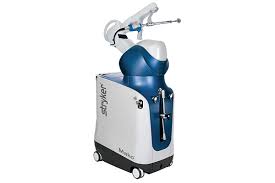
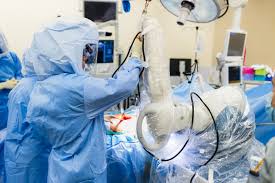
Robotic hip surgery uses cutting‑edge technology to assist surgeons during joint replacement. However, robotic assistance alone cannot guarantee success. Therefore, the surgeon’s skill, judgment, and experience remain crucial. Dr. Utsav Agrawal leverages robotic guidance with his orthopedic expertise to ensure every step is accurate and reliable.
Robotic systems provide real‑time visual feedback that enhances surgical decisions. However, these systems still require human control and clinical insight. Because Dr. Agrawal understands both technology and human anatomy deeply, he can anticipate challenges and adjust techniques in real time. As a result, patients receive more predictable outcomes with fewer complications.
Dr. Utsav Agrawal leads robotic hip replacement at Varunam Super Speciality Hospital with a strong foundation in orthopedic surgery. He assesses each case comprehensively, considering patient age, activity level, joint condition, and lifestyle goals. This detailed evaluation ensures that the robotic hip replacement plan fits each individual’s needs.
Before surgery, Dr. Agrawal reviews imaging studies and creates a 3D surgical plan. Then, with robotic assistance, he performs precise bone preparation and implant positioning. The robot enhances his accuracy, while he retains full surgical control. Because of this teamwork, patients experience improved joint alignment and better long‑term stability.
Choosing Dr. Utsav Agrawal as your robotic hip surgeon offers clear advantages:
- Precision implant positioning for better joint mechanics
- Less tissue damage and minimal post‑operative pain
- Faster recovery and shorter hospital stay
- Improved long‑term mobility and function
- Tailored surgical plans based on individual anatomy
Robotic hip surgery at Varunam Super Speciality Hospital emphasizes early mobilization and structured rehabilitation. Because Dr. Agrawal integrates clinical expertise with robotic precision, patients benefit from both strength and stability in their new joint.
Robotic hip replacement begins with a thorough pre‑surgery evaluation. Dr. Agrawal reviews health history, imaging studies, and physical exam findings to build a customized plan. Then, he uses advanced robotic technology to guide implant placement with precision.
During surgery, the robotic system helps map bone contours and joint alignment. At all times, Dr. Agrawal remains in control, making real‑time decisions that match the patient’s goals. After surgery, patients receive structured care including pain management and physiotherapy. Early mobilization under guided exercises helps restore strength and walking ability quickly.
Varunam Super Speciality Hospital provides robotic-assisted hip replacement in Harda, offering advanced orthopedic care with enhanced precision and safety. Robotic technology supports surgeons in accurate planning and controlled implant placement, leading to improved joint alignment and long-term stability.
The hospital is equipped with modern operation theatres, advanced robotic systems, and experienced orthopedic specialists. This technology-driven approach minimizes tissue damage, reduces surgical errors, and supports faster recovery, making Varunam Super Speciality Hospital a trusted destination for robotic-assisted hip replacement in Harda.
Q1. What is robotic-assisted hip replacement?
It is a modern hip replacement surgery where robotic technology assists the surgeon in precise implant positioning and joint alignment.
Q2. Who can benefit from robotic-assisted hip replacement?
Patients with severe arthritis, avascular necrosis, hip fractures, or degenerative hip conditions may benefit after clinical evaluation.
Q3. Is robotic surgery safer than conventional surgery?
Robotic assistance enhances accuracy and consistency, reducing complications and improving surgical outcomes.
Q4. Does robotic-assisted surgery allow faster recovery?
Yes. Precise implant placement and minimal tissue disruption help patients recover faster and regain mobility sooner.
Q5. Is post-surgery physiotherapy required?
Yes. Structured physiotherapy is essential to restore strength, balance, and normal movement after surgery.