
Specialist Orthopaedic and Hip Replacement Surgeon

Chief Knee and Hip Replacement, Complex Trauma Surgeon
- M.B.B.S.
- M.S. Orthopaedics
- Fellow in Knee and Hip Replacement, Mumbai
- Fellow In Knee and Hip Surgery, Germany
- Fellow in Knee and Hip Surgery, NHS, Singapore
- Fellowship in Complex and revesion knee and Hip replacement, London, Lancaster, UK
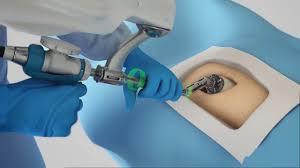
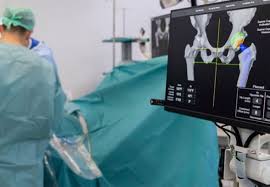
Robotic-assisted surgery provides several benefits compared to traditional methods:
- Enhanced precision in implant placement for better alignment and longevity
- Minimally invasive approach that reduces tissue damage and post-operative pain
- Faster recovery and shorter hospital stay
- Lower risk of complications such as dislocation or uneven leg length
- Improved mobility and long-term function
These advantages make robotic-assisted hip replacement a preferred choice for patients seeking reliable and efficient treatment for hip disorders.
Patients who may benefit from robotic hip replacement include those with:
- Severe osteoarthritis or degeneration of the hip joint
- Avascular necrosis (AVN) affecting the femoral head
- Trauma or fracture leading to joint damage
- Chronic pain limiting walking or daily activities
- Failed previous hip surgeries requiring revision
Dr. Utsav Agrawal evaluates each patient thoroughly to determine if robotic-assisted surgery is the most suitable approach, ensuring personalised treatment plans.
During robotic hip replacement, small incisions allow for minimal tissue disruption. The robotic system assists the surgeon in:
- Aligning implants with millimetric accuracy
- Planning optimal implant size and position
- Controlling bone removal precisely to preserve healthy tissue
This technology ensures that each joint is customised to the patient’s anatomy, enhancing stability and long-term performance. Dr. Utsav Agrawal supervises every step, combining robotic precision with surgical expertise for optimal results.
- Smaller incisions reduce infection risk
- Accurate implant placement prevents future dislocations
- Minimally invasive approach reduces blood loss
- Customised surgical planning improves long-term outcomes
Robotic assistance enhances the precision and safety of hip replacement procedures, giving patients confidence in both immediate recovery and long-term joint function.
Varunam Super Speciality Hospital is equipped with advanced surgical infrastructure to support robotic hip procedures:
- State-of-the-art operating theatres with robotic systems
- Preoperative 3D planning software for accurate implant alignment
- Post-operative physiotherapy and rehabilitation units
- Monitoring and critical care facilities for enhanced safety
These resources ensure seamless surgical execution and superior patient outcomes for those undergoing robotic-assisted hip replacement.
Maintaining hip health after surgery is essential for long-term success. Patients are advised to:
- Engage in recommended low-impact exercises to strengthen hip muscles
- Maintain a healthy weight to reduce stress on the joint
- Follow up regularly with Dr. Utsav Agrawal to monitor implant function
- Avoid high-impact activities that may compromise the new joint
These measures help preserve mobility, prevent complications, and extend the lifespan of the hip implant.
Q1. Who performs robotic hip replacements at Varunam Super Speciality Hospital?
All surgeries are performed and supervised by Dr. Utsav Agrawal.
Q2. Is robotic hip replacement safer than conventional surgery?
Yes, robotic assistance allows precise implant placement, minimally invasive incisions, and reduced complications.
Q3. How long is recovery after robotic hip surgery?
Recovery varies by patient, but most begin gentle movement immediately and progress to full activity within weeks under physiotherapy guidance.
Q4. Who is suitable for robotic hip replacement?
Patients with osteoarthritis, AVN, trauma, or failed prior hip surgeries may benefit from robotic hip replacement.
Q5. How long will the hip implant last?
With proper care, regular follow-ups, and adherence to post-operative guidance, implants typically last 15–20 years or longer.