

- M.B.B.S.
- M.S. Orthopaedics
- Fellow in Knee and Hip Replacement, Mumbai
- Fellow In Knee and Hip Surgery, Germany
- Fellow in Knee and Hip Surgery, NHS, Singapore
- Fellowship in Complex and revesion knee and Hip replacement, London, Lancaster, UK
Choosing the best implant for knee replacement is one of the most important decisions a patient will make before undergoing knee surgery. Many patients feel confused because there are multiple implant types, brands, and materials available. Moreover, each implant has its own strengths, and the ideal choice often depends on the patient’s age, lifestyle, bone structure, and medical condition.
To help you understand your options clearly, Dr. Utsav Agrawal, a leading orthopaedic surgeon specializing in knee replacement, explains everything you need to know. In this detailed guide, we will discuss implant types, longevity, materials, advantages, and how to choose the best implant for knee replacement based on individual needs.
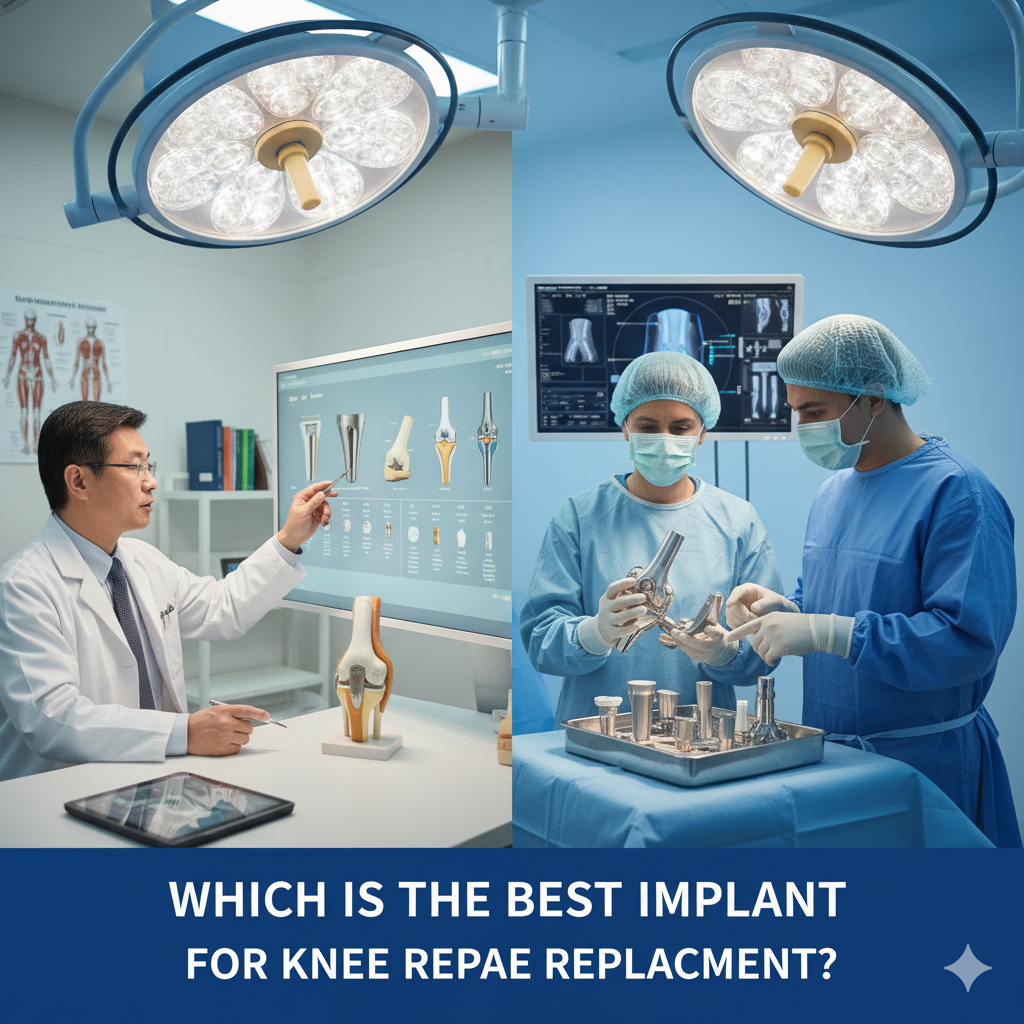
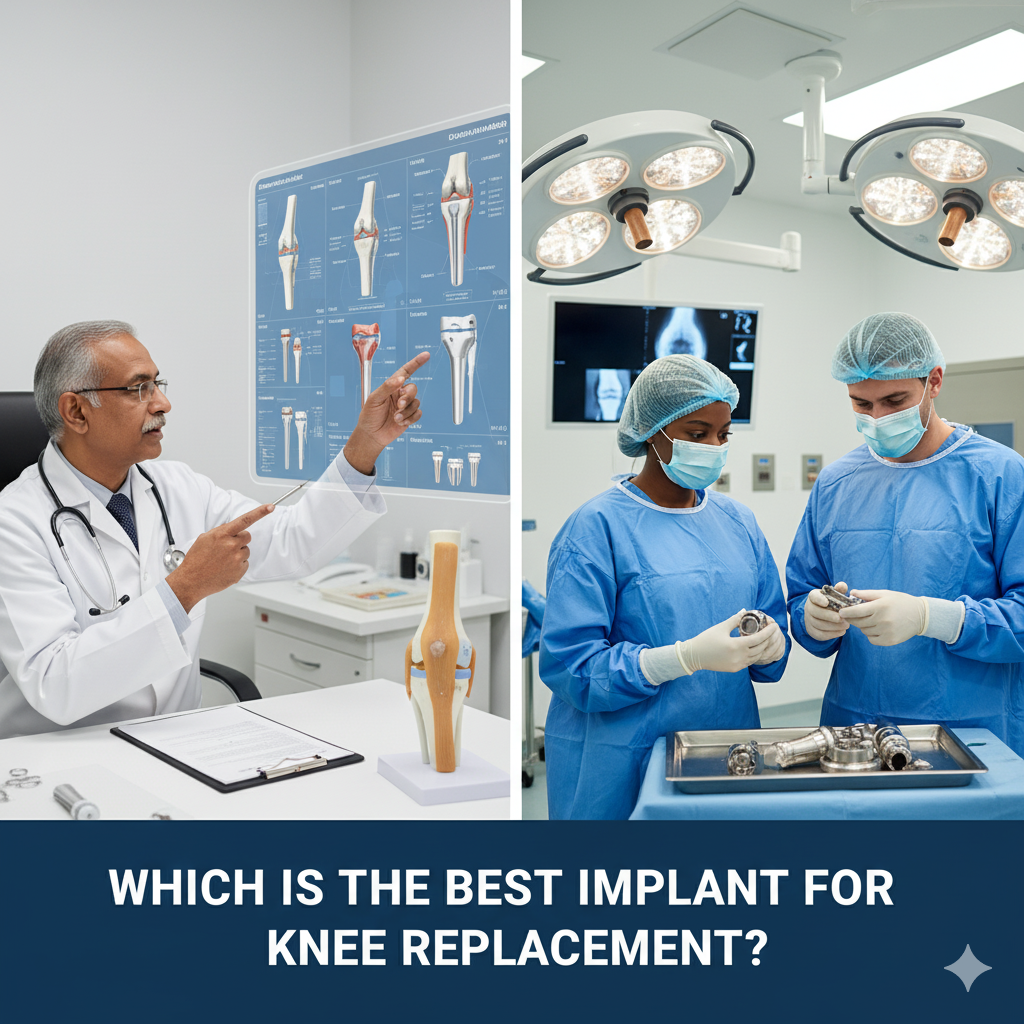
Before choosing the best implant for knee replacement, it is essential to understand why implants matter so much. The knee implant replaces the damaged cartilage and bone surfaces, allowing smooth movement and pain-free walking. When patients select the right implant, they experience:
- Better joint stability
- Longer implant lifespan
- Improved range of motion
- Faster recovery
- Reduced long-term complications
Additionally, modern implants are designed to mimic natural knee movement, offering greater comfort during activities like climbing stairs, walking, and sitting cross-legged.
a) Cruciate-Retaining (CR) Implants These implants preserve the Posterior Cruciate Ligament (PCL). They are ideal for patients whose ligaments are healthy. CR implants allow more natural knee movement and may feel more comfortable during bending.
b) Posterior-Stabilized (PS) Implants If the PCL is damaged or weak, PS implants replace its function with a specially designed post. These implants provide exceptional stability, especially for patients with severe arthritis.
c) Mobile Bearing Implants These implants allow more rotation and movement, offering flexibility similar to natural knees. They are suitable for younger patients with an active lifestyle.
d) Fixed Bearing Implants These are the most commonly used implants because they are stable and long-lasting. Fixed bearing implants are recommended for older patients or those with moderate activity levels.
e) Gender-Specific Implants Women’s knee structure differs from men’s. These implants fit the female anatomy more precisely, improving comfort and function.
Many patients worry about implant lifespan. Fortunately, today’s implants are designed for durability. On average, the best implants for knee replacement last:
-
15 to 20 years for standard implants
-
25 years or more for premium implants like Oxinium and ceramic models
Moreover, implant longevity increases when:
-
Surgery is performed by an experienced orthopaedic surgeon
-
High-quality materials are used
-
Patients maintain a healthy lifestyle post-surgery
Dr. Agrawal uses advanced surgical techniques that enhance implant survival and patient comfort.
Selecting the best implant for knee replacement provides several major benefits:
-
Improved mobility even during daily activities
-
Reduced pain and inflammation
-
Fast recovery due to smoother joint movement
-
Long-term durability, reducing the need for revision surgery
-
Better quality of life, allowing you to resume normal activities confidently
Moreover, modern implant designs enhance knee function so significantly that many patients feel like they regained their natural knee.
Dr. Agrawal follows a detailed evaluation process before recommending the best implant:
- 1. Detailed examination of knee movement and ligaments
- 2. X-rays and advanced imaging to analyze bone condition
- 3. Lifestyle assessment including activity level and goals
- 4. Discussion of available implant options
- 5. Clear explanation of expected results, longevity, and comfort
Because of his expertise, patients receive personalized guidance and superior surgical outcomes.